This topic should be explored from a Rosicrucian point of view rather than a psychological point of view in order to prevent clarity for the Rosicrucian. As a Rosicrucian and the continues strive in evolving to a higher plane there are certain aspects that is part of this evolution. We are only partly the same person as yesterday. This can mainly be derived from the concept of dualism. The physical body has change but has the soul identity changed?
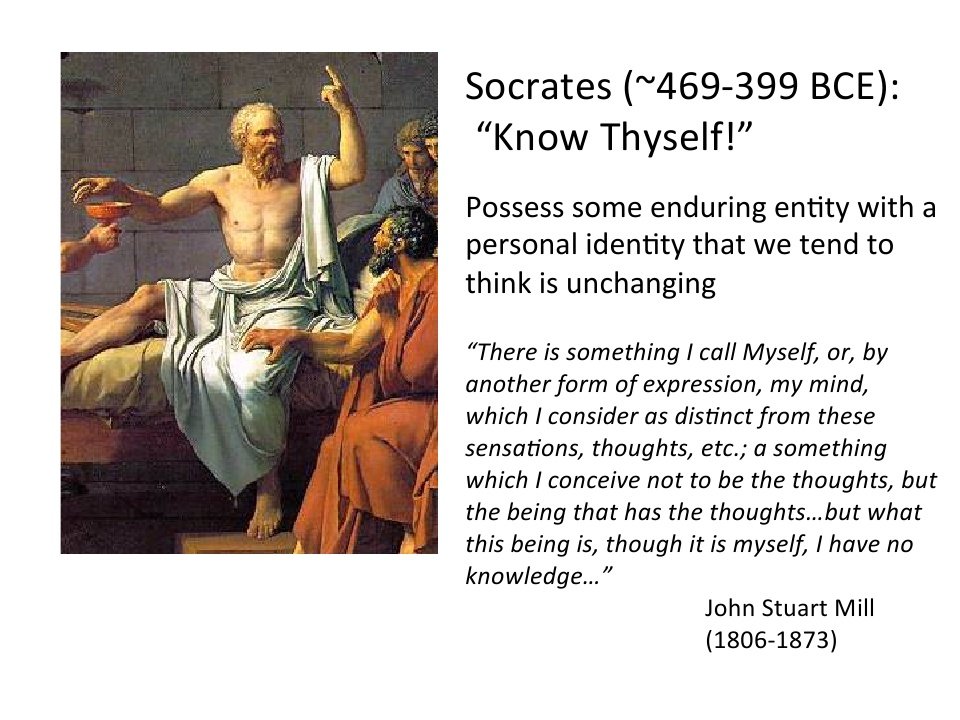
What part of our soul identity is the receptor of receiving the knowledge of the cosmic power and is also capable of transmitting cosmic power. “Know Thyself”
Within our own inner evolution we better ourself from one incarnation to the next.
The mind-body
This is about what is the relationship between the mind and the body of which consciousness is playing a huge role. Also intentionally thoughts – can think about something you choose.
Two views of the mind is physicalism (materialism) and dualism.
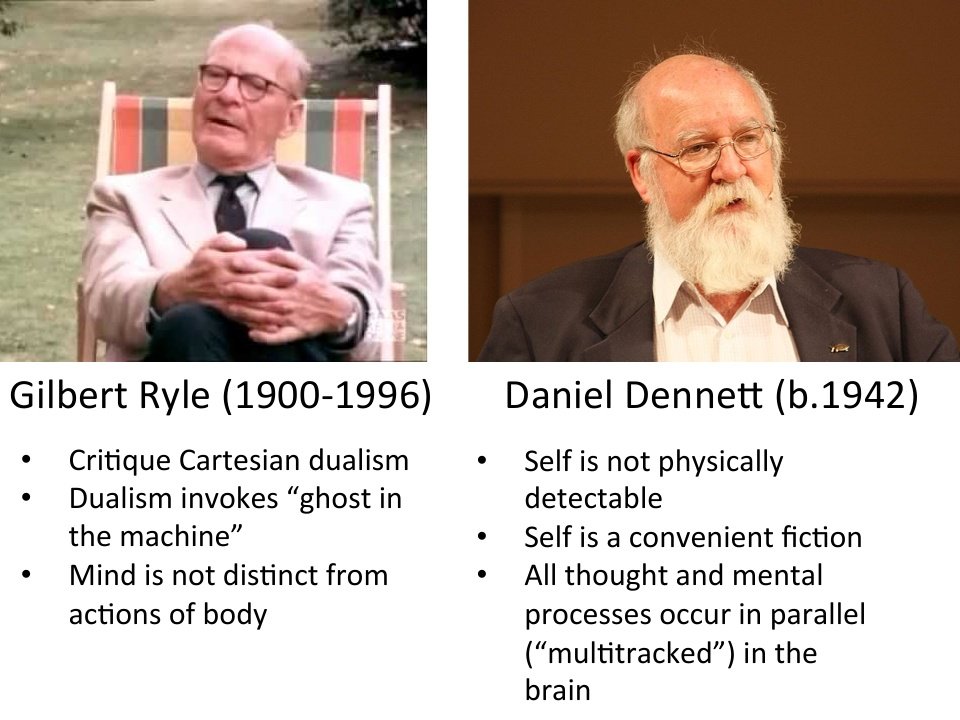
Can we make sense of us possessing a non-physical part as it is one thing that makes us different from other living organism such as plants or even animals.
First argument of dualism. The argument of religion, non-physical mind, soul, spirit or essence. But how does an atheist fit in. Although many atheists are also spiritual. Paul Calaghan confessed on his death bed as being spiritual.
Second argument of dualism. The argument of introspection. Our access to our conscious mind is different than to access our physical body.
Third argument of dualism. The argument of irreducibility. The famous though experiment by Frank Jackson tries to explain. Read the argument and responses about Black and White Mary.
Dualism
Interactionism dualism is how can something non-physical cause something physical? Descartes’ solution of the pineal gland is not good enough as it is still something physical. A new type of dualism is called epiphenomenalism. It gives us a non-physical mind without the problem of causation. Thus we can be physicalists if we find a way around Jackson’s knowledge argument. We can be interactionist dualists, if we can explain how the non-physical affects the physical. We can be epiphenomenalists if we can explain how we come to know of minds in both other people and ourselves.
Can machines have minds? Study Searle and artificial intelligence about weak and strong artificial intelligence. He has no objection to weak a.i. Searle’s Chinese room is an effort to explain strong a.i.
Some thoughts: How different is the computational process from the process of our own minds. Think about how we learn languages. Maybe we have an inflated sense of the way in which our own minds work? Some virtual reality movies, Dark City, Source Code, The Cabin in the Woods, Strange Days, Enders game, Brainstorm, Total Recall, The Lawnmower Man, Virtuosity, The Thirteenth Floor, Vanilla Sky, The Cell, the severely trippy, eXistenZ, Jurassic Park and Inception. Also the 1982 version of Tron and the 1973 Westworld.
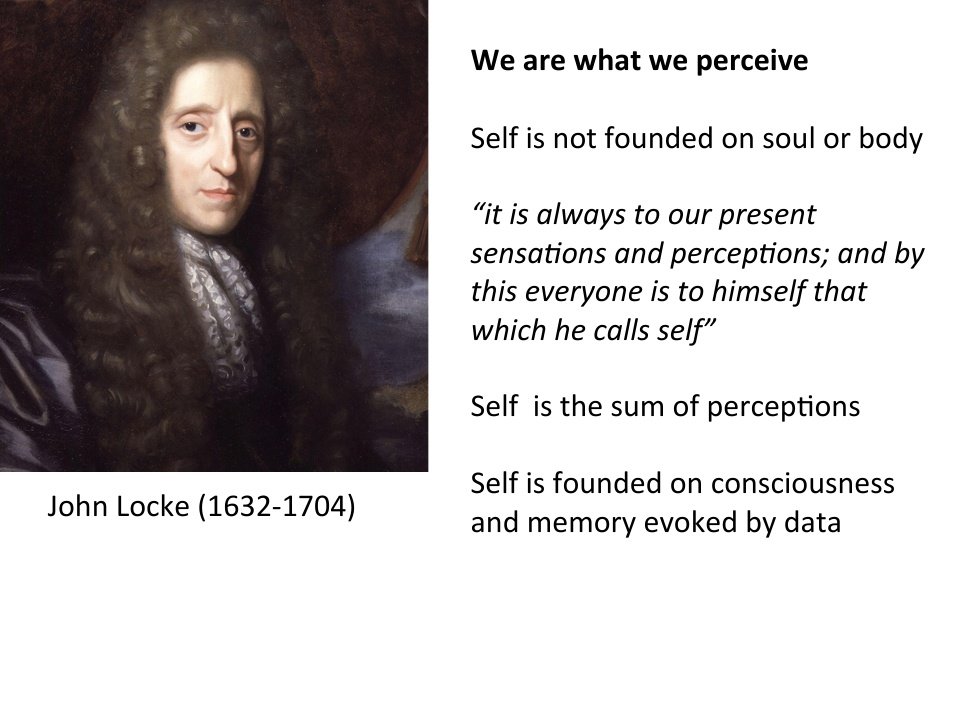
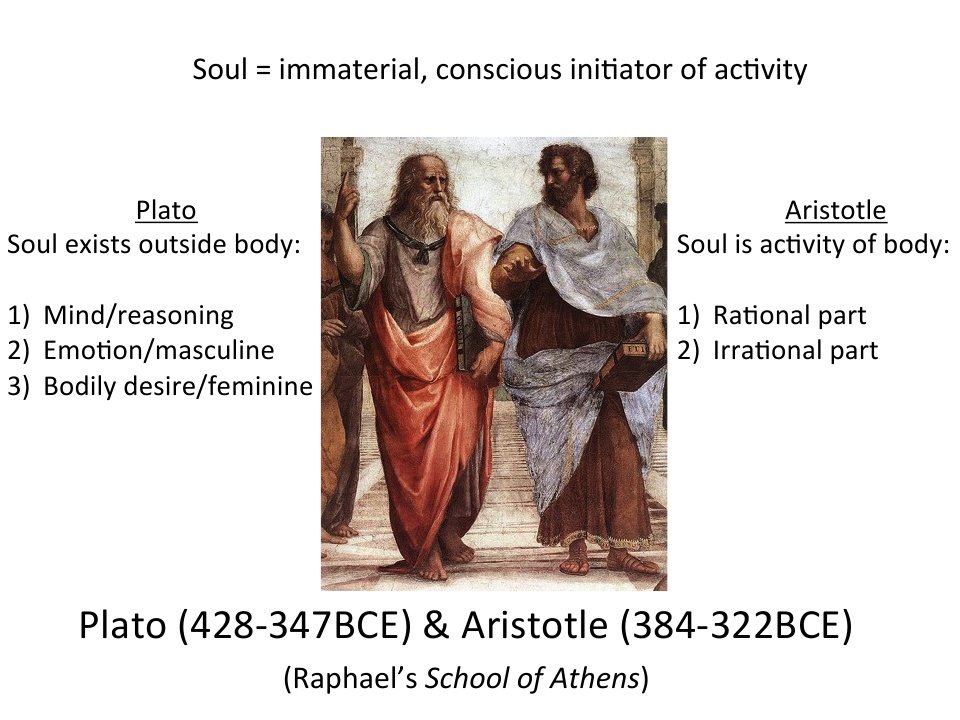
Theories of Personal Identity. Some things I learned from this episode is that in my opinion we are only partially the same person as yesterday. The physical aspect has changed and the non observable or measurable emotional aspect is or should not change. If we can prove the ‘soul’ it will mean we are only changing partially, and that is physically change. Maybe we need to combine western philosophy and eastern philosophy to obtain this answer as eastern philosophy tends more towards the spiritual part of the body. The question about personal identity is that if ‘Persistence’ is making the same person over time then there is one stream of ‘something’ that stays content over our life time? Is this the soul? A few additional quotes from historical figures shows that this has been an age old debate.
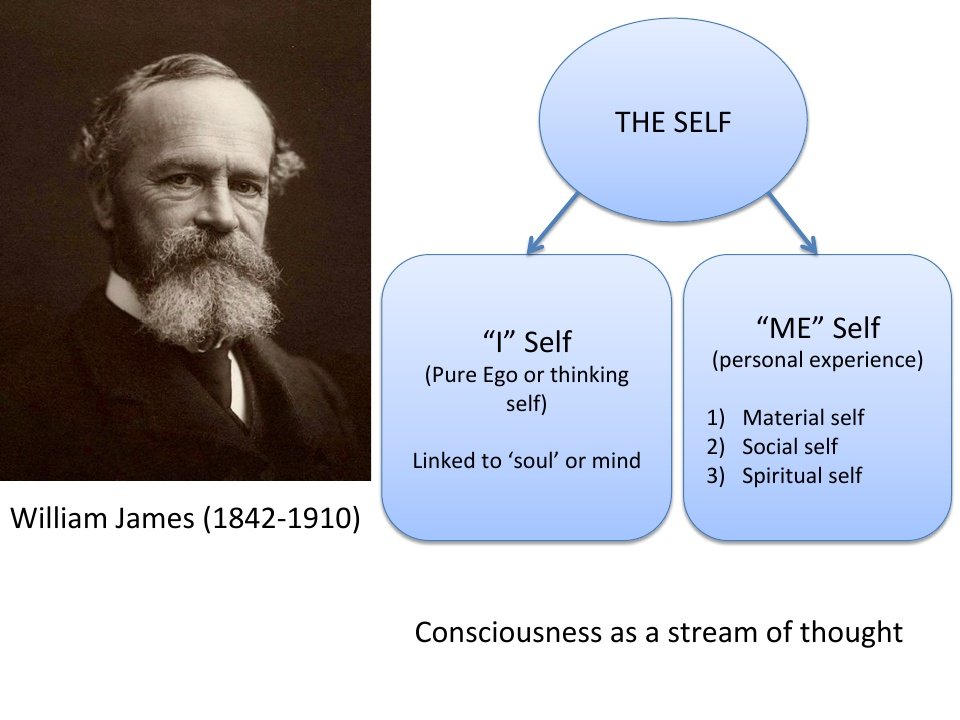
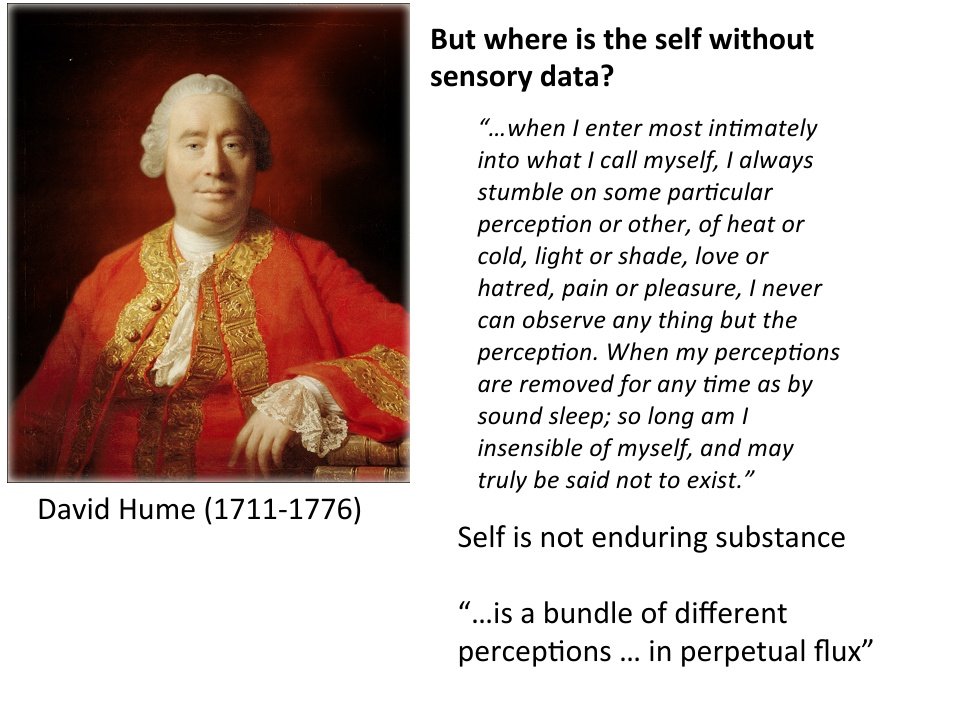
The same soul theory.
- Each person has a unique, immaterial soul.
- The soul is attached to the body, but is not part of the body.
- You go where your soul goes. To persist over time is to have the same soul over time. Even after death.
Argument 1 for the same Soul Theory.
- We can conceive of life after physical death.
- Therefore it is possible that you could survive your physical death. “The Conceivability Thesis”
- Your body does not survive physical death.
Therefore.
Conclusion: There must be something that is you that is detachable from your physical body.
Argument 2 for the same Soul Theory.
- Your body can change completely without you ceasing to exist.
- Your mind can change completely without you ceasing to exist.
Therefore.
Conclusion: There must be some other unchanging thing which is you.
Recognition and the Same Soul Theory.
Maybe our souls is expressed through our behaviour.
Maybe we just assume that the same soul is tethered to the same body.
The Same Mind Theory
Theory 1.
A is identical to B iff A remembers being B, or B remembers being A.
Theory 2.
A is identical to B iff A remembers being B, or B remembers being A and the memories are real memories.
Theory 3.
A is identical to B iff A seems to remember being B, or B seems to remember being A, and these quasi memories are caused in the right way.
Theory 4.
A is identical to B iff A is linked by a chain of physiological states to B, where states adjacent in the chain are link by similarity and causation in the right way.
The Same Body Theory
Study:
-Bernard Williams’ Thought Experiment
-Parfit’s Bundle Theory
-Lewis and Personal Fission
Thoughts:
-We can adopt the same soul theory but then we have to explain how we recognise others.
-We can adopt the same body theory if we give up the life after death concept.
-We can adopt the same mind theory, if so we have to explain personal fission (might do by adopting Lewis’s view.)
-We can adopt Parfit’s Bundle theory…There is no such thing as personal identity. I am just a collection of many different attributes.
Determinism or Free Will
Distinction must be made here between being determined, of course, once sense in which we’re often “determined” to do certain things – By this, we mean that you have a very strong desire to ensure that something happens a certain way. The notion of determinism that we were focusing on is different to this. It is the idea that events are predetermined before they occur. To be a little more specific – it’s any view that holds that some set of facts X at time t1 automatically entails that the world will be a certain way at time t2. The facts that determine our actions can be both external (other people, our upbringing, environmental factors, etc.) or internal (our beliefs, desires, or dispositions etc.). The important thing is that the existence of these facts means that whenever we appear to be making a choice, there is in fact only one option truly open to us.
Determinism
Determinism is that all events, including human actions and choices, are without exception completely determined.
Sources: Fate (cosmic sources), Science (laws of nature), Phsycology (character such as up bringing culture) and Theology and religion (an all knowing Creator).
Indeterminism
Is that some events are not determined. This is free will or partially free will.
Premise 1: If determinism is true then we don’t have free will and cannot be morally responsible.
Premise 2: If indeterminism is tru then human actions are random, thus not free, so we don’t have free will and cannot be morally responsible.
Conclusion: We are never free nor morally responsible for what we do.
I guess in this case Soft determinism is created.
Walter Terence Stace gives a good description of this. Stace tries to reconcile free will with determinism by adopting a compatibilist view of freedom. We seem to be free, yet determinism suggests that our actions are determined by preceding events over which we have no control. The way out of this conflict, says Stace, is to realize that free actions are those that we do because we desire to and that are unconstrained by external forces.
-Does this give us free will we really want?
Further debate about this is Libertarianism.
Roderick Chisholm description is “Human beings are responsible agents; but this fact appears to conflict with a deterministic view of human action (the view that every event that is involved in an act is caused by some other event); and it also appears to conflict with an indeterministic view of human action (the view that the act, or some event that is essential to the act, is not caused at all).” To solve the problem, I believe, we must make somewhat far-reaching assumptions about the self of the agent — about the man who performs the act.
–But how do we make sense of this given what we know about how the universe works?
And then there is Hard Determinism. Described by Paul Ree, “To say that the will is not free means that it is subject to the law of causality. Every act of will is in fact preceded by a sufficient cause. Without such a cause the act of will cannot occur; and, if the sufficient cause is present, the act of will must occur. …”
-Does this means giving up free will as well as moral responsibility?
There is also Daniel Dennett : The model of decision making I am proposing has the following feature: when we are faced with an important decision, a consideration-generator whose output is to some degree undetermined produces a series of considerations, some of which may of course be immediately rejected as irrelevant by the agent (consciously or unconsciously). Those considerations that are selected by the agent as having a more than negligible bearing on the decision then figure in a reasoning process, and if the agent is in the main reasonable, those considerations ultimately serve as predictors and explicators of the agent’s final decision.
Finally, you can decide whether you believe in determinism, free will or both. If you believe that people have souls or spirits which survive death, determinism probably isn’t for you. Similarly, if you believe in any form of the supernatural (anything outside or above the natural world), you will probably have a hard time accepting determinism. Remember, if you choose determinism, you must believe that it is because you were caused to do so (either by this article or a variety of other possible determinants). If you choose free will, you must believe that it is entirely your choice, and you could have chosen otherwise
I guess the big thing here is about Free Will. Do we have free will? Personally I think for not knowing what will or can happen in the future does not give us free will. Then Newton’s law of motion, for every action there must be a reaction also can be implemented on this. At the end of the day it comes down how we think and I think it is a psychological process that effects your decisions. We are not always in control of our thoughts although we think we are. We are effected by external events as well as our state of mind mentally. Thus I think we do not have free will to a large extend, some people is just more luckier than some.
Philosophers and non-philosophers stand on a level of equality with respect to death. There are no experts on death, for there is nothing to know about it. Not even those who study the death process have an edge on the rest of us. We are all equals in thinking about death, and we all begin and end thinking about it from a position of ignorance.
Death and its concept are absolutely empty. No picture comes to mind. The concept of death has a use for the living, while death itself has no use for anything. All we can say about death is that it is either real or it is not real. If it is real, then the end of one’s life is a simple termination. If it is not real, then the end of one’s embodied life is not true death, but a portal to another life.
Having no content, we must speak of death metaphorically. For those who think death is real, death is a blank wall. For those who think it is not real, death is a door to another life. Whether we think of death as a wall or a door, we cannot avoid using one metaphor or another. We often say that a person who dies is relieved of suffering. However, if death is real, then it is metaphorical even to say that the dead do not suffer, as though something of them remains not to suffer. As there are already many speculations about some sort of ‘next life,’ I will focus on the view that death is real and marks the final end of an individual’s life
Let us explore the metaphor that death is a wall a bit further. Each of us is born facing this wall. From that moment on, every step we take is towards it, no matter which way we turn. There is simply no other direction to take. Like a fun house mirror, the wall of death show us our living fears and distorted images of ourselves. All we see when we look at death is a reflection of our own lives.
Death has no subjective meaning at all. It will come to other people, but never to me. Of course, I know that I am going to die. Death means the end of my future. However, as long as I am alive, I will be living toward that future possibility of no longer having possibilities.
The unavoidable conclusion is that, if death is real, neither I nor you will ever personally taste death. I will cease to be conscious before the end. No matter how close I come to it, death recedes before me. I am actually dead only for others. When the end actually arrives, my dead body passes into the hands of the coroner. I will no longer be there. Death is always described from the perspective of the living. As Ludwig Wittgenstein famously put it, “Death is not an experience in life.”
The concept of death is unlike most other concepts. Usually we have an object and the concept of that object. For example, we have a horse and the concept of a horse. However, the concept of death is absolutely without any object whatsoever. Thinking about the prospect of one’s own death is a constant meditation upon our own ignorance. There is no method for getting to know death better, because death cannot be known at all.
One trouble with discussing this topic is the instinctive fear of death. We tend to avoid death in our thoughts and actions. However, if we could forget our fears for a minute, we could see more clearly how interesting the concept actually is from a more detached point of view.
Birth and death are the bookends of our lives. Living towards death in time gives one’s life a direction and framework within which to understand the changes that life brings. The world looks very differently to the young and the old. The young look forward. The old look back. What matters to us changes as we get older. The prospect of death informs these changes. The young have an intellectual understanding that death comes to us all, but their mortality has not become real to them. For the old, mortality starts to sink in.
For a long time, I have been puzzled by two famous philosophical ideas about death, one from Plato and one from Spinoza. The first is that a philosopher has a vital concern with death and constantly meditates upon it. The second is that the wise person thinks of nothing so little as death. Perhaps the truth is somewhere in the middle. Ignoring death leaves us with a false sense of life’s permanence and perhaps encourages us to lose ourselves in the minutiae of daily of life. Obsessive rumination on death, on the other hand, can lead us away from life. Honestly coming to terms with one’s death involves reflection on its significance in one’s life, and thinking about the larger values that give life its meaning. In the end, it is useful to think about death only to the point that it frees us to live fully immersed in the life we have yet to live.